


By Dr. Atif Ansar
I spent the week of March 23rd in New York – at DCD Connect and then at Madison Square Garden with the Foresight team. Two different rooms. But the same elimination logic was in the air in both. March is over which means brackets are being decided. And in the AI infrastructure buildout, the question of who advances and who goes home is no longer hypothetical.
Here’s what I keep coming back to: the developers who lose this race won’t lose it on capital. They won’t lose it on demand. They’ll lose it because they couldn’t build – not because of what happened on site, but because of what happened before a shovel ever hit the ground.
Social license is now a delivery problem. And most of the industry isn’t treating it like one.
The New Constraint Nobody’s Pricing
The scale of the current buildout is extraordinary. More than $560 billion committed globally. Demand from hyperscalers, co-locators, and sovereign AI programs that shows no sign of softening. Capital is available. Sites are being acquired. Every serious developer is in the bracket.
But in the past 18 months, projects across Europe and North America have stalled – not because of contractor failures or supply chain disruption, but because of community opposition, permit moratoriums, and regulatory scrutiny that nobody saw coming early enough to act on.
Amsterdam placed a moratorium on new data center construction within city limits. Ireland restricted data center connections to the national grid after public pressure over energy demand. In the United States, communities from Virginia to Texas have organized against proposed facilities – slowing permitting processes that developers had budgeted as routine.
These aren’t edge cases anymore. They’re a pattern.
And every one of those stalled projects has the same financial signature as a construction delay: financing costs accruing on idle capital, revenue recognition pushed into the next quarter, IRR deteriorating by the week. The mechanism is different, but the damage is identical.
I’ve said before that time is a form of capital and that every month of delay has a measurable cost. Social license failures are delay events. They just happen upstream – before the schedule even starts.
Why Projects Look Fine Until They’re Not
The pattern I described in January – where problems visible to people on the ground fail to surface until they become crises – applies here too, but earlier in the project lifecycle.
Permit risk is being managed by government relations teams, largely in isolation from the delivery schedule. Community engagement is treated as a communications activity, not a project control. Sustainability commitments are made at the bid stage and then handed off to whoever is available to manage them.
No one owns social license the way the second line owns schedule integrity. No one is tracking it the way your team tracks float.
The result is predictable: projects enter permitting with optimism and exit it with a problem. By the time the delay surfaces in a board report or an earnings call, the corrective window has long closed.
This is exactly the same failure mode as construction delay – just with a longer lead time between the warning signal and the crisis. Which means the cost of inaction is even higher, because the compounding runs longer before anyone notices.
Speed and Social License Are Not Opposites – But That’s the Wrong Frame
The DCD debate in New York framed this as a tension: speed versus social license. I understand why that framing is intuitive. It suggests a tradeoff, and tradeoffs are something our industry knows how to reason about.
But the framing is wrong, and accepting it is costing developers time they can’t recover.
The developers who are moving fastest right now are not the ones who chose speed over social license. They’re the ones who invested in community relationships early enough that they never had to choose. Early engagement with local government, credible sustainability commitments tied to measurable outcomes, transparent communication with communities before opposition has a chance to organize – these don’t slow a project down. They remove the obstacles that would have stopped it later.
The developer who earns trust in year one has more operational freedom in years two and three. The one who skips that investment often discovers, mid-build, that social license is the one constraint that cannot be recovered with more capital or a faster schedule.
This is not idealism. It is risk management. And the industry’s best operators are already acting on it.
What This Looks Like
In January, I introduced the Three Lines of Defense as a governance framework for delivery. The same model applies here, and the diagnostic is just as useful.
Ask yourself: if community opposition or a permit complication materialized on one of your active projects tomorrow, who would surface it, who would own the response, and how quickly would it reach leadership?
If the answer involves more than two handoffs, or takes more than 48 hours, your social license risk is unmanaged.
Here’s what the three lines look like applied to this problem:
- First Line (Execution): Project teams are accountable for maintaining active relationships with local stakeholders and flagging emerging tension early – not managing it quietly in the hope it resolves.
- Second Line (Review): A centralized function – whether that’s your PMO, a dedicated risk team, or a senior project controls lead – is independently tracking permit risk, community sentiment, and regulatory exposure across the portfolio. They are asking the uncomfortable questions before someone else forces the issue.
- Third Line (Approval): Senior leadership is engaged on social license the same way they’re engaged on schedule performance. It’s on the agenda at portfolio reviews. Someone owns it with authority.
Most organizations have none of this in place. Government relations operates separately from delivery. Community engagement is ad hoc. Regulatory risk lives in legal until it becomes a crisis. The three lines don’t connect.
That’s the gap. And in 2026, it’s expensive.
A Word on Foresight
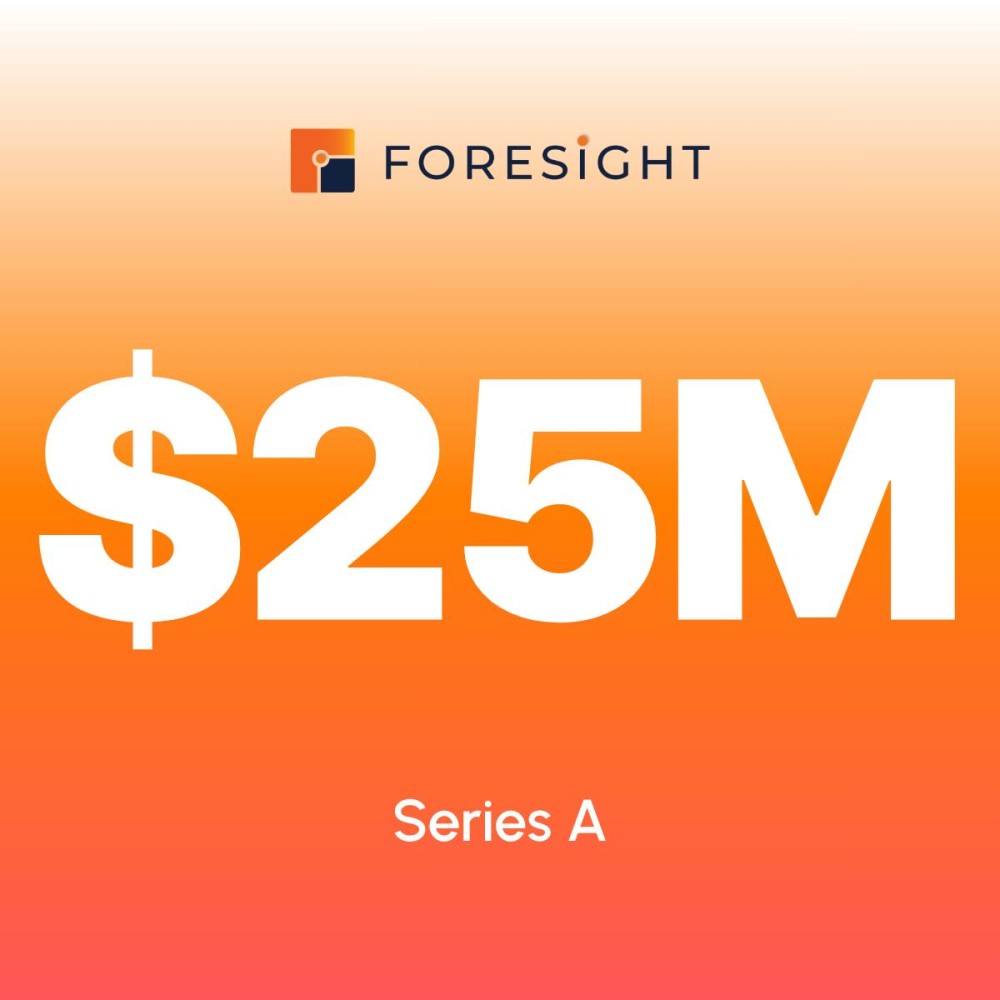
Last month, we announced a $25 million Series A. I want to say something about what that means beyond the press release.
Investors are looking closely at where execution risk lives in this industry. The platforms attracting institutional capital are the ones that can demonstrate delivery discipline at scale – not just strong demand signals, but the organizational capability to see problems coming and act before they become crises.
That’s what we built Foresight to do. The constraint set is expanding – social license is exactly the kind of upstream risk that a predictive delivery platform needs to surface early, before a permit has been stalled for six weeks and the options have narrowed.
We are grateful for the confidence of our investors. And more clear-eyed than ever about the work ahead.
Who Advances?
By the end of 2026, the bracket will be considerably clearer. Some developers will have moved through this cycle with delivery discipline intact – on time, within financial parameters, with community relationships that make the next project easier to permit than the last. Others will have discovered, at significant cost, that capital and demand are necessary but not sufficient.
The teams that advance will be the ones who entered this year with all three: capital, delivery discipline, and the organizational capability to earn – and keep – the right to build.
Here’s the diagnostic question: who owns social license in your organization – and do they have the data and authority to act before it becomes a delay? Leave me a comment or reach out directly. I’d welcome the conversation.
– Atif