



17 December 2025
By Dr. Atif Ansar
This is the season for magic. For twinkling lights, for hope, for believing in things we cannot see. There is something deeply human in our capacity for optimism, especially as one year ends and another begins.
But in data center delivery, magical thinking is not charming. It is costly.
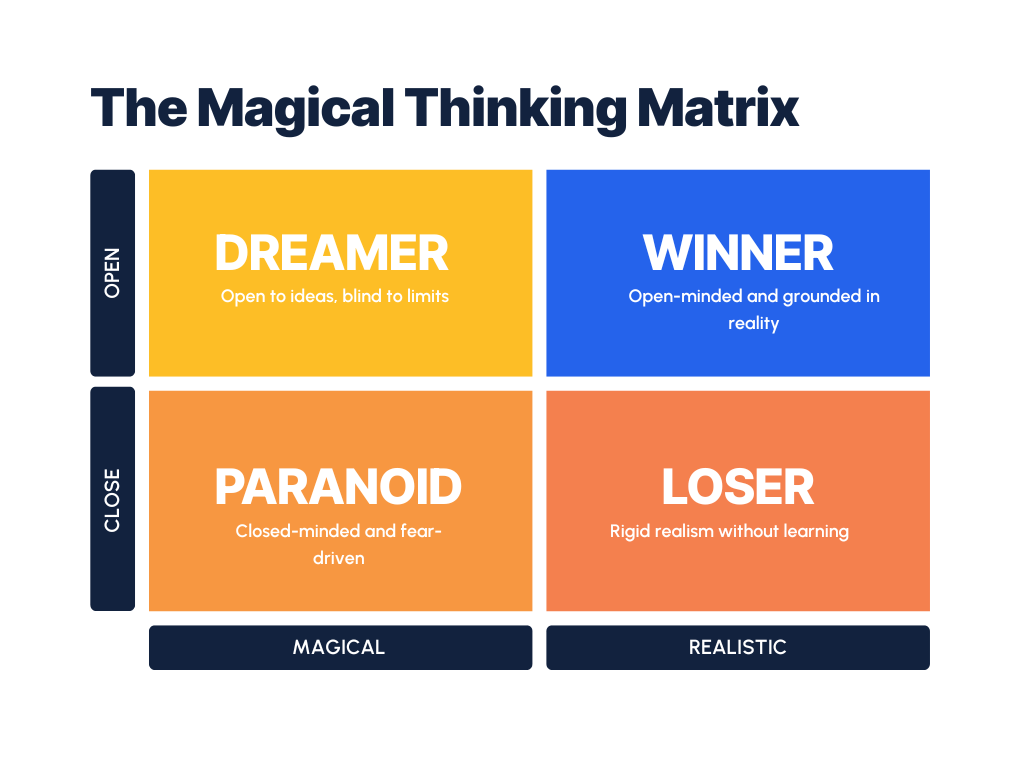
I’ve written before about the 2x2 matrix of project leadership, how the most dangerous leaders aren’t the close-minded realists or even the paranoid, but rather the open-minded dreamers who mistake hope for strategy. The quadrants tell four very different stories about how we navigate complexity under pressure. What I want to explore here is what that actually looks like in practice, because magical thinking has a way of disguising itself as professionalism.
When There’s No Time to Plan
I was speaking recently with a project controls professional, and he described something I’ve seen play out across countless projects. He was talking about teams that couldn’t see the forest from the trees because their heads were so engrossed in everything that was going on. The excuse was that they didn’t have time to do scheduling. Instead, they had a tendency to get lost in the details. Their explanation for why schedules were not being maintained was simple: there was no time to schedule.
Pause on that for a moment. Teams responsible for delivering billion-dollar assets on compressed timelines had concluded that planning itself was a luxury.
This is magical thinking in its purest form. Not optimism expressed out loud, but an operating mode in which urgency crowds out discipline. Firefighting becomes normal. Stepping back feels irresponsible. Planning is postponed in the name of progress.
This is magical thinking in its purest form, not as overt optimism or wishful declarations, but as an operational pattern where urgency crowds out discipline. Where firefighting becomes the default mode, and the idea of stepping back to plan feels like a luxury, we can’t afford.
The irony, of course, is that this reactive stance is precisely what creates the fires in the first place.
When teams are perpetually responding to the latest crisis rather than anticipating what’s coming three months ahead, they’re essentially hoping that momentum and hard work will be enough. They’re waiting for heroes to emerge and—for someone to work late enough, think fast enough, or push hard enough to rescue the project when things inevitably slip.
And sometimes it works. Someone does step up, the crisis gets resolved, and the project limps forward.
But here’s what doesn’t happen: the organization doesn’t capture why the crisis occurred in the first place, doesn’t update its processes to prevent recurrence, and doesn’t carry that knowledge forward to the next project. Each new project team essentially starts from scratch, doomed to repeat the same patterns because the lessons never got systematically embedded.
That’s the real distinction between reactive and proactive organizations. Reactive teams treat every issue as unique and every hero as essential. Proactive teams treat patterns as data, institutionalize learning, and build systems that make heroics unnecessary.
What Visibility Actually Means
Visibility isn’t just knowing where a project stands today. It’s understanding where it’s headed months from now. It’s seeing coordination failures before they cascade. It’s giving executives clear status without burying them in documents or misleading progress percentages.
Most importantly, visibility requires a culture where raising issues early is rewarded, not punished.
At Foresight our project assurance methodology lays out how to create this kind of continuous visibility. The premise is simple: you can’t manage what you can’t see, and hope is not a visibility strategy.
Data-driven forecasting plays a central role, not because it replaces judgment, but because it challenges optimistic narratives that otherwise go untested. It forces teams to confront actual complexity early enough to act. The best project organizations don’t hope their way to success. They engineer it through disciplined execution and an unvarnished view of reality.
Where to Start
Let me end with something practical. Take one project in your portfolio and ask:
- Are your baseline schedules realistic, or built on optimistic assumptions?
- When was the last time someone on the team surfaced bad news early and was explicitly thanked for it rather than treated as the problem?
- Can you see true status at any moment, or do reports lag reality by weeks?
- Do lessons from past projects systematically inform new ones, or does each team essentially start from scratch?
If you don’t have clear answers, that’s your starting point. Systems, tools, and processes only work when they’re anchored in a willingness to confront uncomfortable truths.
Sunshine Ahead
As the year closes, I am looking ahead to January in Honolulu, where I, alongside the Foresight team, will be attending PTC’26.
Even in paradise, the conversation remains grounded. How do organizations create visibility when everyone is moving too fast to look up? How do they shift from reactive heroics to proactive prevention? How do they build discipline around time when optimism is the cultural default?
If you are attending, I would welcome the chance to connect. These questions are too important to tackle alone.
A Final Thought
Operational excellence isn’t magic. It’s discipline. It’s the courage to stay open-minded while being brutally realistic about risks and constraints. That mindset, the winner’s quadrant, is where sustainable delivery becomes possible.
As we head into 2026, my hope is that more of us choose to operate there.
— Atif
This article is part of a thought leadership series by Dr. Atif Ansar. Subscribe to receive future posts. Read last month’s article here.